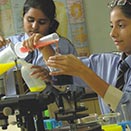
If you walk into the room of a teenager preparing for JEE or NEET, you’ll usually find the same scene: door shut, desk piled high with thick books, and a kid sitting in complete silence trying to brute-force their way through physics numericals. Most families assume that’s just how it has to be—that cracking a huge national exam is a lonely, miserable grind. But if you talk to students who actually make it through without losing their sanity, they’ll tell you something very different. Trying to solve every single problem in isolation gets exhausting fast. Places like Academic Global School try to break that isolation by creating an environment where kids actually talk to each other about what they're learning. Joining an IIT Coaching Institute where students work through tough concepts together turns what feels like a punishing, solo marathon into a team effort.
It's one thing to read a chapter in a textbook and think you understand it. It's an entirely different thing to explain that same chapter to the person sitting next to you. The moment a 16-year-old tries to walk a friend through a tricky calculus problem or an organic chemistry mechanism, they instantly realize where their own understanding is shaky.
What Actually Happens When Kids Study Together
The volume of material for medical entrance tests is honestly staggering. Between endless biology diagrams and chemical equations, it’s easy for a student studying alone to feel like they’re drowning. Whether a student is going to a NEET Training Institute in Gorakhpur or revising with friends after class, having peers around to share the load changes the whole dynamic. During lunch breaks or free study periods, kids end up quizzing each other on quick facts or going over test errors together. A student who might be too shy to raise their hand in front of a full classroom will happily ask a desk neighbor to re-explain a concept they missed. That informal daily back-and-forth keeps small doubts from piling up into massive knowledge gaps down the line.
A lot of parents worry that putting their child into a competitive exam environment will turn them into a nervous wreck, or worse, lead to a toxic classroom where kids hide notes from each other. But when a school sets the right tone, the exact opposite happens. Finding the Best NEET Training in Gorakhpur inside a supportive school campus means kids actually cheer for each other. When someone’s test score goes up after weeks of struggling, the rest of the group sees proof that hard work pays off. It creates a healthy, rising-tide energy where everyone feels inspired to put in the work without treating their classmates like enemies.
The hardest part of these two years usually isn't the difficulty of the science—it's the mental toll. Teenagers spend a lot of time secretly believing that everyone else has it completely figured out while they alone are falling behind.
Simple Ways Peers Keep Each Other Sane
At the end of two years, getting a great rank is obviously the goal, but the way a teenager grows during the process matters just as much. Learning how to listen, how to explain complex ideas clearly, and how to support people when things get tough at IIT Coaching Institute are skills that stick around for life. When good guidance is paired with a solid group of friends, preparing for the future stops being a scary ordeal and becomes something young people can actually take pride in doing together.