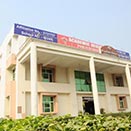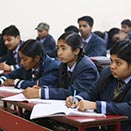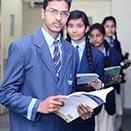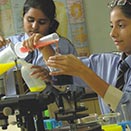
Putting a big digital screen on a classroom wall does not automatically make teaching better. In a lot of schools, smart boards just become expensive TV sets where teachers play pre-recorded videos while kids sit passively in the dark. That isn't modern teaching—it's just moving a textbook onto a glowing monitor. To make Smart Class Education in Gorakhpur UP actually work, the technology has to stay simple, durable, and secondary to the teacher. Screen time only matters if it helps a child understand a hard concept faster than a piece of chalk could. At Academic Global School, digital tools are used to solve real learning problems, not to put on a show for visitors.
The biggest advantage of a digital screen is showing things you cannot draw on a blackboard in thirty seconds. Trying to sketch a working four-stroke engine, a beating human heart, or planetary orbits using white chalk usually ends up looking like a messy scribble. When a teacher spends fifteen minutes drawing a diagram on the board, half the class period is already gone before any actual explanation begins.
A screen should never turn a classroom into a movie theater. If kids are just staring at a display for forty minutes without touching anything, their minds drift off within ten minutes. They start fidgeting, looking out the window, or passing notes to their friends. Getting real value out of Smart Class Education in Gorakhpur UP means putting the interactive tools directly into the students' hands whenever possible:
Relying entirely on screens causes its own set of problems. If children spend all day looking at monitors and tapping buttons, their handwriting turns messy, their eye strain goes up, and their ability to focus on long reading passages drops completely. A screen is great for visual clarity, but it cannot build the muscle memory required for long written exams.
Technology works best when it is paired with traditional paper-and-pen practice:
At the end of the day, a smart board is just a piece of hardware mounted on a wall. It cannot replace a patient teacher who notices when a child in the third row looks confused or hesitant. Technology cannot give a child an encouraging word when they struggle with a hard topic or help them navigate a bad day. Schools that succeed with Smart Class Education in Gorakhpur UP treat screens as a basic helper, like a good dictionary or a well-stocked science lab. Places like Academic Global School focus on training teachers to use digital visuals smoothly without letting technology take over the human side of the classroom.
Another big concern for parents today is how much time children spend staring at screens outside of school. With phones, tablets, and televisions at home, school should not become another place where kids sit transfixed by glowing monitors for six straight hours. Smart classes must be used selectively. A math period might use the screen for ten minutes to demonstrate a geometric angle, and then turn it off for the rest of the period so students can work on practice problems together. Science classes might use a quick video clip to show a rare chemical reaction, but the actual lab work is still done with real beakers, test tubes, and chemical solutions. Keeping technology as an occasional tool rather than a constant distraction keeps children's attention spans healthy and grounded in the real world.